
A fragile grid and a Fragile Fortress
Sign up to get Be More Baltic by email.
IN THE DARK
Late on Friday, October 30, the lights went out in Kaliningrad. Emergency automation shut down part of the CHP-2 combined heat and power station, the region’s biggest power plant. Parts of the city lost power and mobile internet. Residents told local media that at least six towns went dark. The regional government says power was back within an hour. Fontanka, a St Petersburg news site, reported several hours. Ten days on, officials still have not said what tripped the plant.
WHY THE LIGHTS WENT OUT
Daria Zhukauskaite, our Kaliningrad 2050 research associate, read and analysed the local press reporting on it. The coverage was flat and procedural, mostly relaying statements from the government and from Rosseti Yantar, the grid operator, which denied any fault on its own network.
One possible explanation, she writes, is “island mode”. Since February 2025, when Estonia, Latvia and Lithuania left the Soviet-era grid they shared with Russia and Belarus (we wrote about their road to energy independence in our latest Baltic Barometer), Kaliningrad has had to generate all of its own power, much of it at CHP-2. On a grid that small, losing one big generator can force automatic power cuts for consumers. Part of the same plant shut down in June, with the same result. Another likely explanation is worn-out, overloaded power infrastructure, with repairs and new components hampered by sanctions. Nothing so far points to sabotage.
A fortress that cannot keep its own lights on is not much of a fortress.
FRAGILE FORTRESS, NOVEMBER 30
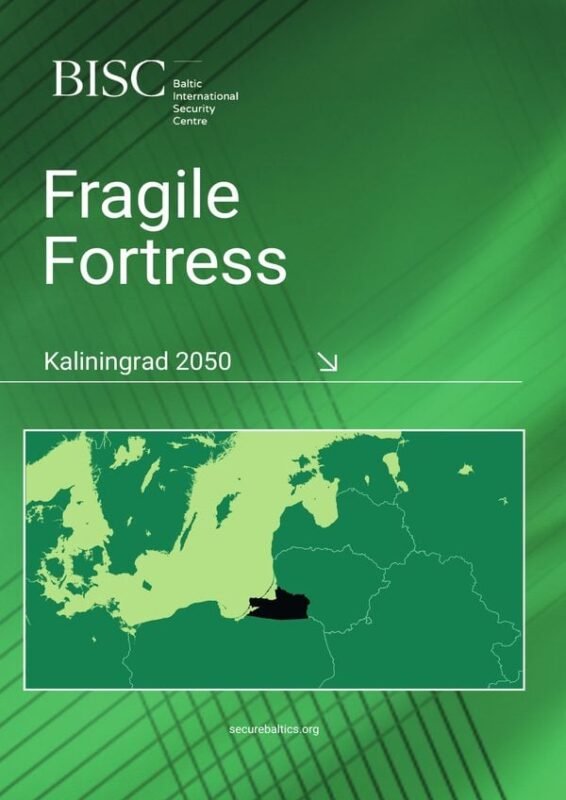
That fragility is the subject of our book, Fragile Fortress, on the stresses inside Russia’s exclave, edited by Christopher Peters for our Kaliningrad 2050 programme. Its authors cover the depleted garrison, the economy, the media, politics and memory, society and identity, regional relations, and what instability there could mean for the neighbours. Fragile Fortress goes online on our website on November 30. The same day, at noon, we launch it at Liberal House in Brussels. Places are limited. Register for the launch.
BALTIC LESSONS FOR BRITAIN
On October 27 Edward Lucas took our “Be more Baltic!” message to the UK Parliament, as guest speaker at the annual meeting of the RussiaWatch All-Party Parliamentary Group. Estonia’s security service has published yearly reports on sub-threshold threats since 1998, he told MPs and peers. Britain should do the same, and “tell the truth” about murder, sabotage and bribery that officials too often overlook or cover up.
Two days later he spoke on cognitive warfare to about 50 students and faculty at Oxford University’s Europeanist Society. Russia need not defeat Europe on the battlefield, he argued, if fear, uncertainty and doubt do the job for it.
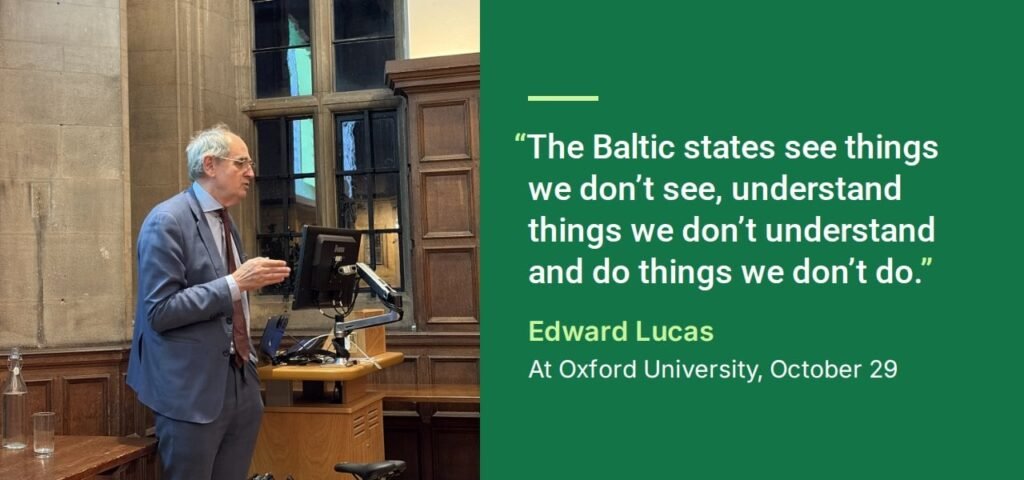
Photo: Greta Latvėnaitė
REINFORCEMENTS
A warm welcome to Eva Sula, an adviser on Nato and European defence cooperation, who joins us as a Senior Fellow on Defence and Security. We are now publishing two series of her papers on securebaltics.org. The first is on the UK-led Joint Expeditionary Force (JEF). If you haven’t read them already, start with Why JEF Works, where she argues that it succeeds on shared geography and practical cooperation. The second series, The Baltic Reality, began on November 5. Its first part, Military Geography Matters, argues that Estonia, Latvia and Lithuania are not a single strategic problem and that geography still shapes their defence.
GAS IN STORE
Latvia’s Inčukalns gas storage facility began its winter withdrawal season last month with 12.1 TWh in store, around 2.3 TWh below last winter’s opening level, according to Gas Infrastructure Europe. Baltic operators remain confident, despite tight global gas markets, that stored stocks and expected deliveries through the region’s many import channels will meet winter demand. Our latest Baltic Barometer highlights the transformation behind this resilience (how the Baltic states broke their dependence on Russia and built diversified, regionally integrated energy systems) and why elevated fossil fuel prices still herald difficulties for the Baltic states. Download No Longer an Energy Island.
KALININGRAD MAKES HEADLINES
Russian media gave Kaliningrad a busy week, our weekly Kaliningrad media report finds. Commentators cast Poland’s extra police, border guards and special forces on the border, and American spy planes circling the exclave, as preparations for confrontation. One military correspondent warned of a possible nuclear response to an attack on Kaliningrad. The evidence was thinner: no confirmed incursion, and the aircraft reportedly stayed outside Russian airspace. The region’s real troubles were closer to home: dearer petrol and delayed flights.
GOOD GERMAN JOURNALISM
Bouquets this week in our regular press review to Viktoria Großmann of the Süddeutsche Zeitung, who let young Lithuanians campaigning for universal conscription speak at length, and to Florian Naumann of the Frankfurter Rundschau for his Riga interview with the Latvian analyst Māris Andžāns, who asks Germany to take on more military responsibility in the region.
This week’s edition comes with an English summary and the full German version. Both of our weekly media reviews are made possible by the Friedrich Naumann Foundation for Freedom in Vilnius.
BISC IN THE WILD
- UnHerd: Lucy Ash’s piece on Germany’s new brigade in Lithuania cites our research, which finds Kaliningrad “stripped bare” of ground forces and air defences. Edward Lucas tells her the exclave matters more as a hub for sub-threshold operations and a pretext for escalation.
And in his own words…
- EUobserver: Stephen Kinzer’s new book, which blames Washington for the war in Ukraine, is “topical, readable — and wrong.” Kinzer says Boris Johnson went to Kyiv to enforce an American veto on a peace deal; Edward checked with Johnson, who denies it. Also in English and in Latvian on Delfi.
- The Times: Europe could pay for its defence through a Nato bank, if politicians’ egos allow. Also in Estonian on Delfi.
- EUobserver, reviewing Hanna Notte’s new book: Russia pairs sabotage in Europe with political warfare in the Global South to wear down support for Ukraine.
- Times Radio, speaking to John Pienaar: private finance deals have a poor record and do not solve the real problem of paying for defence.
- Guildhall, a Ukrainian news site, in an interview: most of western Europe sees the war as a fight for Ukraine alone, not as Russia’s bid to remake the whole European security order. The answer: tell the public the truth about Russia’s sub-threshold attacks, and send Ukraine missiles by the thousand.
WHAT WE ARE READING
- Matti Pesu of the Finnish Institute of International Affairs argues in Foreign Affairs that the Nordic countries are forming a deterrence cluster inside Nato. A natural companion to Eva Sula’s second JEF Paper.
- Holger Roonemaa and Sanita Jemberga dig into the arson at Milrem Robotics in Tallinn for Baltic Flank: the attackers broke into the building to start the fire, which points to holes in security. Dogged reporting.
- Camille Roussel traces for Baltic Sentinel how a secretive Moscow visit in August by John Ratcliffe, America’s spy chief, became a Baltic scare story long before any facts emerged. A useful antidote to the doom-mongers.
READ OF THE WEEK
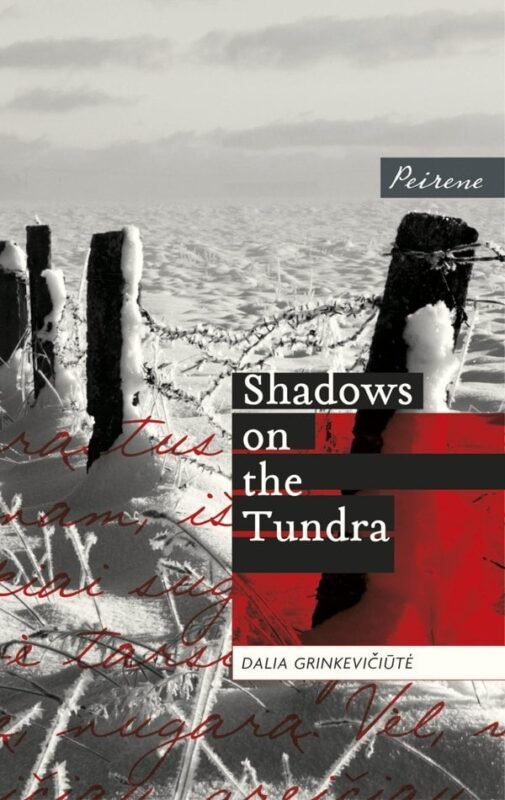
Caspar Schulze, who edits our Baltic Barometer, picks Shadows on the Tundra, Dalia Grinkevičiūtė’s memoir of her family’s deportation to Siberia in 1941. Devastatingly tragic, yet punctuated with moments of profound tenderness, Grinkevičiūtė’s account lays bare the brutality of life in the Trofimovsk Gulag and tells of her unshakeable desire to survive and bear witness to the horrors of the Soviet regime. Written in 1949–50 following her escape and return to Lithuania, the manuscript was hidden from the Soviet authorities in a jar buried in her Kaunas garden and only rediscovered in 1991.
OVER TO YOU
Seen something in Kaliningrad that the official statements leave out? Tell us. And as always, send us spots and tips, rants and raves. Follow us on Facebook, LinkedIn and X.
If you would like to support our work, write to us at donate@securebaltics.org.
Best regards, Edward Lucas and the BISC team
Next dispatch: November 23.
BISC’s motto is “Be more Baltic!” Estonia, Latvia and Lithuania see what the rest of Nato doesn’t see. And they do what others don’t do.
EARLIER DISPATCHES
- Dispatch four: The Kremlin noticed, October 26
- Dispatch three: Crises in Kaliningrad, October 12
- Dispatch two: Narva is not next, September 28
- Dispatch one: We asked Budanov to change his tune, September 16