
What happens when Russia’s exclave breaks down from the inside, and who shapes the response? Twenty security experts spent three days in Vilnius finding out.
From October 8 to 10, BISC and ISM University of Management and Economics brought two dozen practitioners to Vilnius for three days of Kaliningrad crisis simulations. They played decision-makers in Vilnius, Warsaw, Minsk, Moscow, Kaliningrad and other capitals.
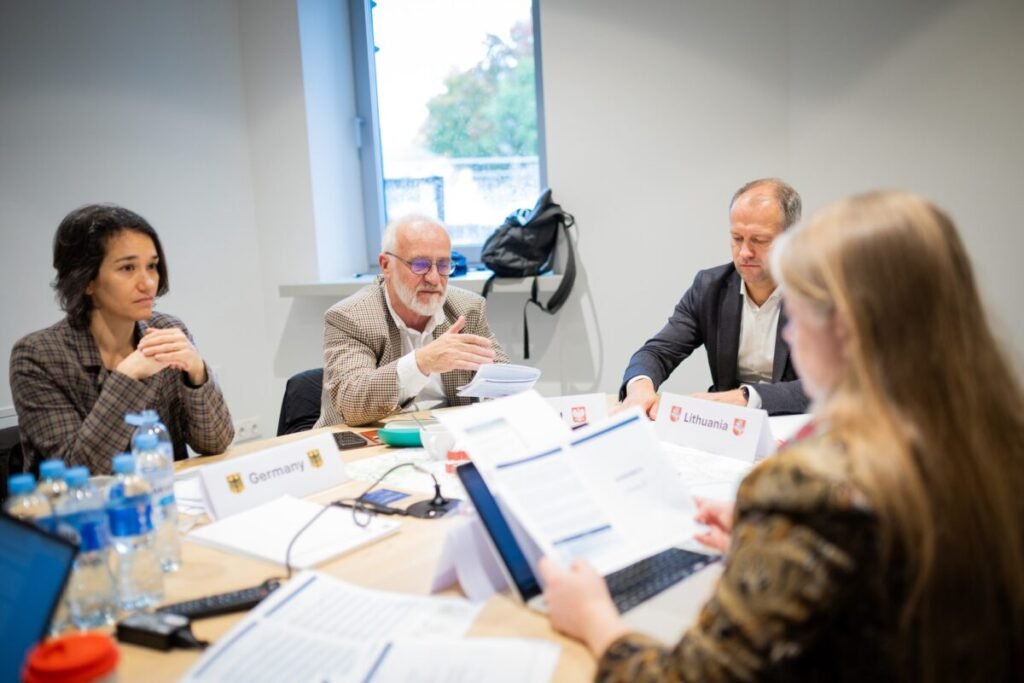
Teams at the simulation table, ISM University, Vilnius. Photo: ISM
Three scenarios
Each day brought a new hypothetical scenario. All three started from the same starting point: Ukraine keeps resisting, and fresh strikes on Russian fuel infrastructure, including Ust-Luga, leave Kaliningrad short. The shortages hit civilians and the exclave’s largely conscript units alike.
First, the shortages set off unrest. Civilians tried to cross into Lithuania and Poland, and troops who refused to be sent to Ukraine mutinied. The simulated Russian authorities considered concessions, then crushed the unrest. Their attempt to press Lithuania and Poland into opening supply routes from Belarus failed. Russia kept control, but over a more resentful population and under closer watch from Nato and European Union decision-makers.
On the second day, hardline mutineers demanding a tougher line against Ukraine and the West seized key infrastructure and took the governor hostage. Moscow was forced onto the defensive, and its need for Western help softened its tone towards countries it usually treats as adversaries. The mutineers tried to break out towards Belarus, first in civilian buses under a humanitarian pretext, then head on. They failed. Poland and Lithuania used their border security measures and put their own and allied troops, the German brigade in Lithuania among them, on high alert.
On the third, a fire at the “gigafactory” battery plant near the Lithuanian border sent toxic smoke across the region. Soldiers balked at fighting it without the training or equipment to do so. The Kremlin blamed its Nato neighbours for sabotage, then found it needed their firefighting and rescue teams. When protests broke out in mainland Russia, Moscow tightened political control instead of dealing with the disaster.
How it worked
Participants played regional governments, the Russian and Belarusian authorities, mutineers and other decision-makers. An adjudication team judged every proposed action and its consequences. New developments kept arriving, from simulated social media posts by the American president to international news coverage, and teams had to adjust their decisions and their public messaging.
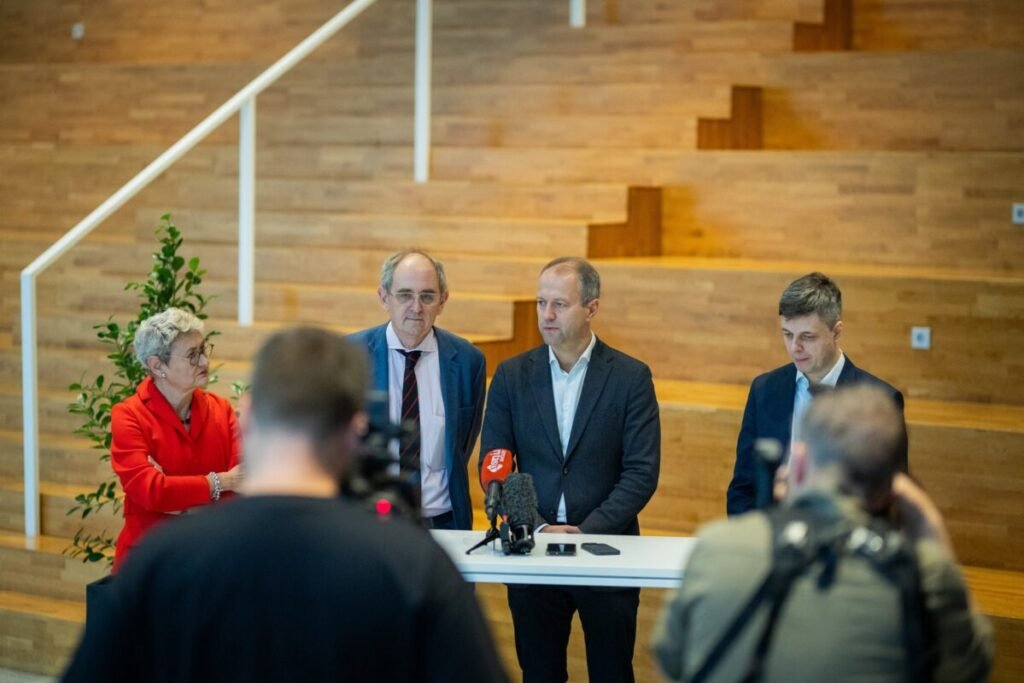
The press conference at ISM on October 9. Photo: ISM
“The purpose was to explore dilemmas and trade-offs, not to predict events,” says Pijus Krūminas, associate professor and head of the ISM Wargaming Lab, who designed and ran the exercise. “Participants had to make decisions with incomplete information, respond to other actors and confront the consequences of their choices. That helps reveal options we might overlook, and difficult decisions we should consider before a real crisis.”
Three findings
Three core findings came out of the exercise. Lithuania, Poland and their partners took the initiative, though they still had to agree among themselves. The simulated Kremlin kept putting political control ahead of solving the problem. And fewer options did not make Russia harmless: a leadership under pressure could create new risks.
Kaliningrad is usually presented as a Russian fortress, with its neighbours cast as potential victims. Our exercise turned that picture around.
Edward Lucas, founder-director, BISC
Edward Lucas, BISC’s founder-director, who convened the simulations, added: “Moscow faced problems it could not simply threaten its way out of. Lithuania, Poland and their partners had choices and the ability to act together. Russia remained dangerous, but it was neither all-powerful nor self-sufficient.”
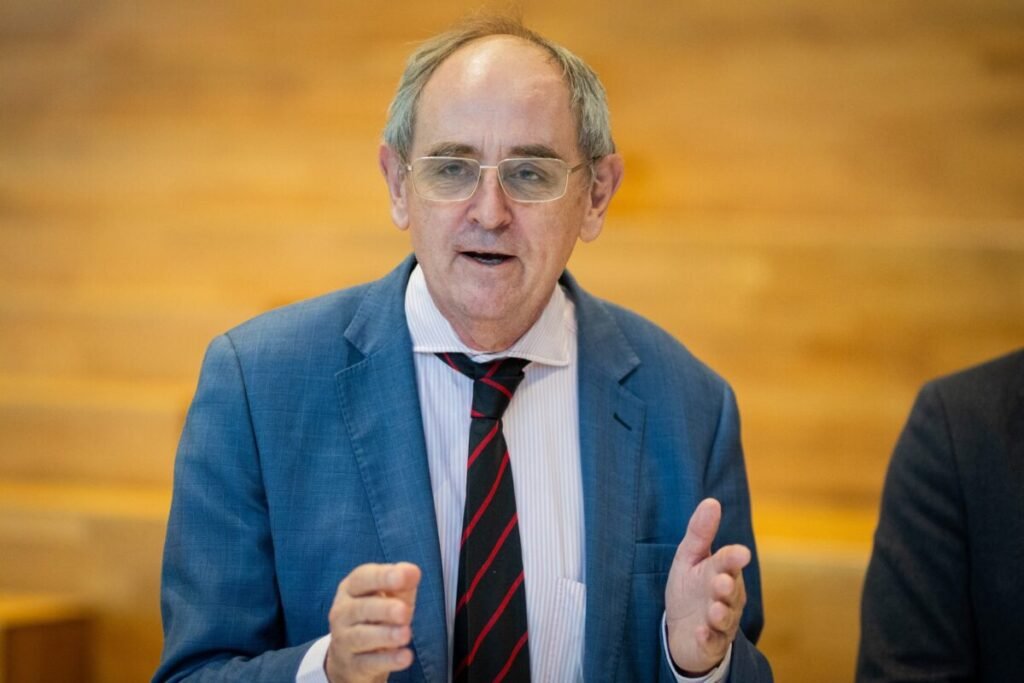
Edward Lucas at the press conference. Photo: ISM
Note: The exercise rested on unclassified information and expert assumptions about conditions in Kaliningrad. Its outcomes depended on the scenarios, the participants’ choices and the adjudicators’ judgements. They do not show how likely such a crisis is, or predict how governments would respond.
In the media
The simulations drew wide interest from Lithuanian and foreign media. Sky News, LRT, 15min, Delfi, TV3, Alfa.lt, Bernardinai and LRT Radijas to name a few.
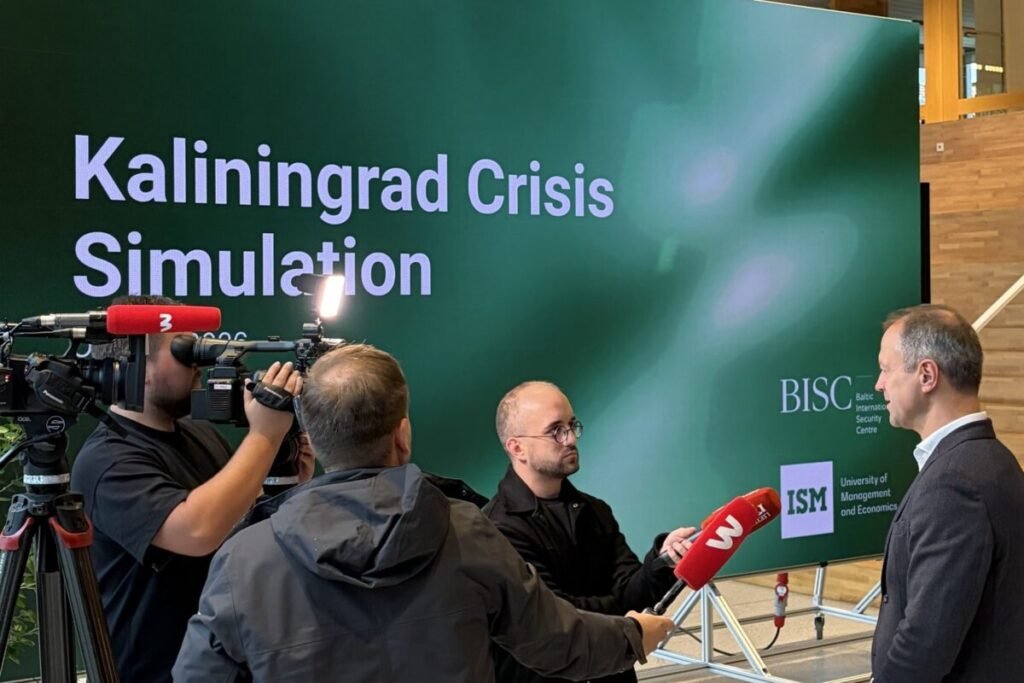
Interviews after the press conference. Photo: BISC
Kaliningrad 2050
The simulations are part of Kaliningrad 2050, our programme on the stresses and strains inside Russia’s westernmost region. Their analysis concludes our book-length report, Kaliningrad 2050: Fragile Fortress, edited by Christopher Peters, out at the end of October. Subscribe to our Be More Baltic newsletter for access when it is published.