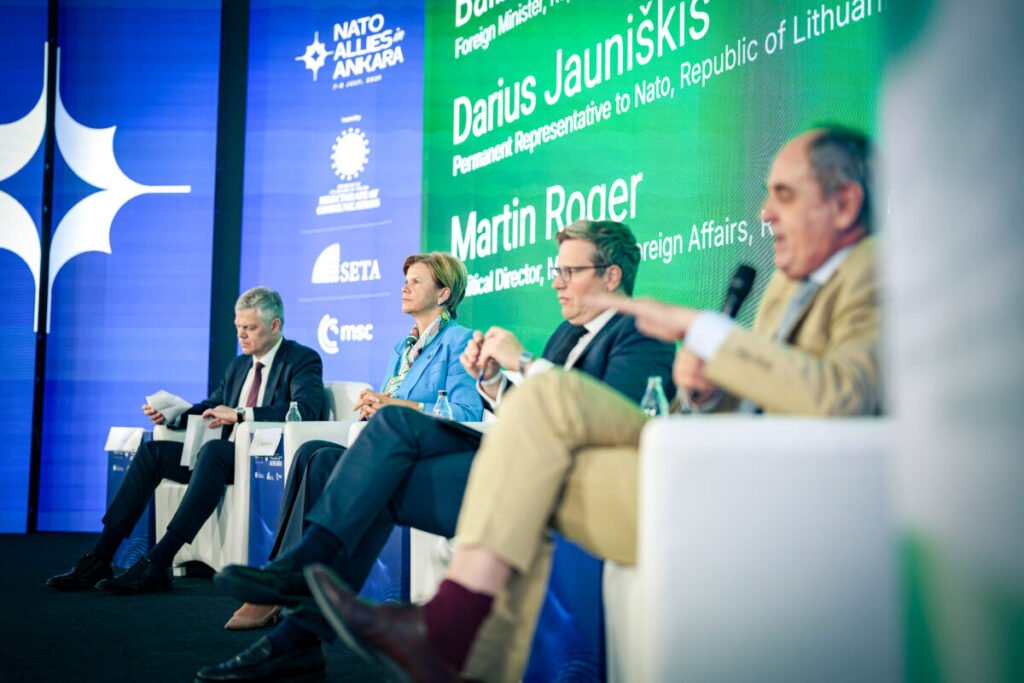
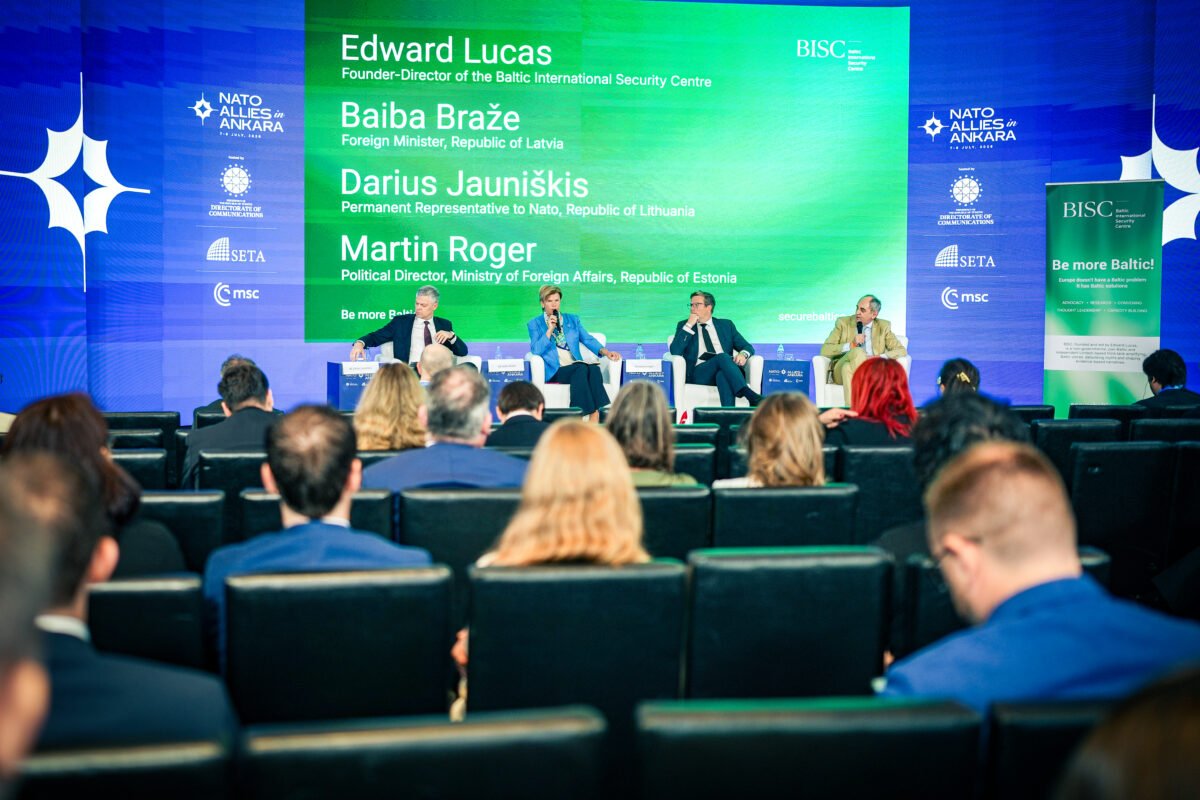
Narva is not ‘next’ except as a tourism destination. That was the message that BISC brought to the Nato summit in Ankara on July 7th.
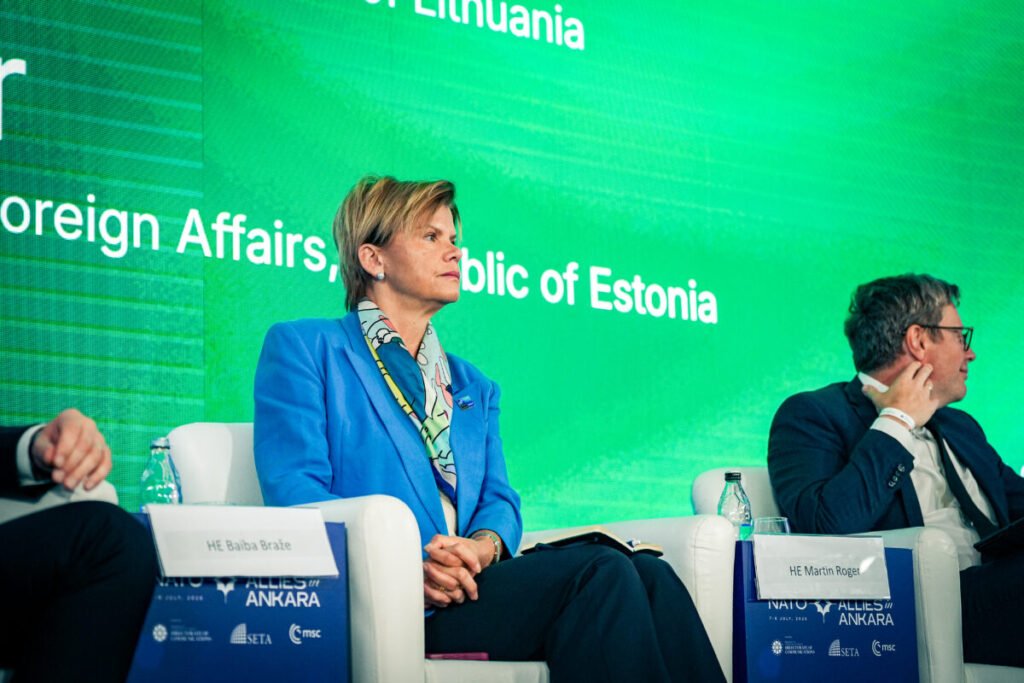
BISC’s side-event, part of the Allies in Ankara series hosted by the Munich Security Conference, was awarded the prime venue and time slot, directly after a presentation by the Turkish defence minister, Yaşar Güler. Moderated by BISC founder-director Edward Lucas, the panel comprised Baiba Braže, Latvian foreign minister; Darius Jauniškis, Lithuania’s permanent representative to Nato, and former head of the VSD security and intelligence service; and Martin Roger, political director of the Estonian foreign ministry
The panellists explained that Baltic readiness and vigilance meant that a surprise attack by Russia would be inconceivable. The main danger is sub-threshold attacks, such as the smuggling balloons from Belarus which have plagued Lithuania in recent months. On this front, Baltic resilience and cohesion offer lessons for the rest of Nato. .
Foreign minister Braže, who spends alternate weekends as a member of the National Guard, spoke of the strenuous mental exercise involved “I have never had to do so much physics” she said, speaking about training in signals and electronic warfare. She also highlighted the social dimension, working closely alongside fellow- Latvians from varied professions and backgrounds, terming it “the best family”.
Martin Roger highlighted the role of Estonia’s Kaitseliit reserve forces, and Darius Jauniškis paid tribute to Lithuania’s “Šaulių Sąjunga” — the Riflemen’s Union, a unique voluntary militia whose members pay for their own uniforms and equipment.
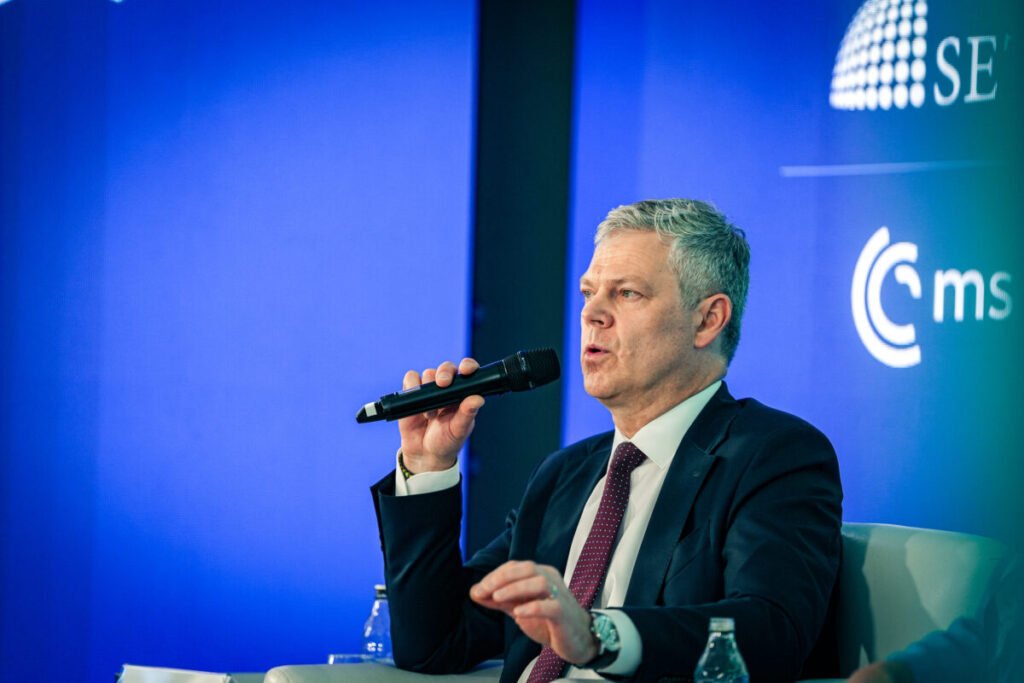
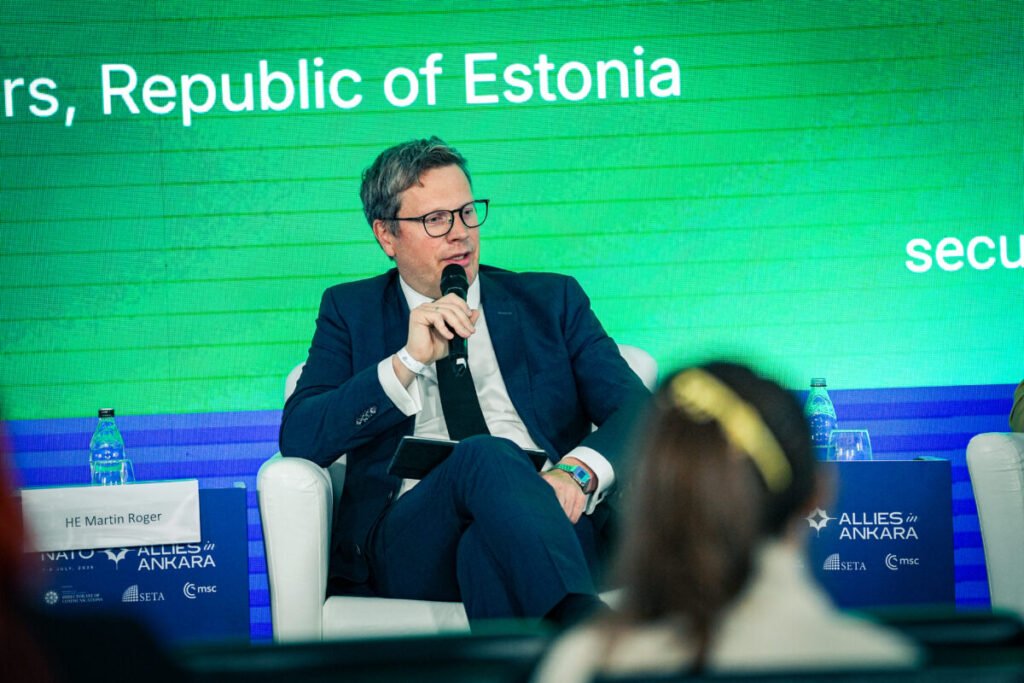
“This was a great start to BISC’s presence on the international stage,” said Edward Lucas. “Our ‘Be More Baltic’ message is timely, and resonates strongly with Nato allies who eager to copy what Estonia, Latvia and Lithuania have been doing for years.”
Lucas also took part in later off-the-record events, including one hosted by BISC’s Vilnius-based thinktank partner, the Global Strategic Studies Centre.
“The main thing that Western governments must do is tell the truth” says Lucas. “Until the public realises the danger we face from Russia’s mischief, mayhem and mind games, they will not demand from their political leaders the changes we need”
Lucas wrote about the Ankara summit in his weekly Times column.