
Caspar Schulze, October 12, 2026
Christopher Butler Research Fellow and Baltic Barometer Editor
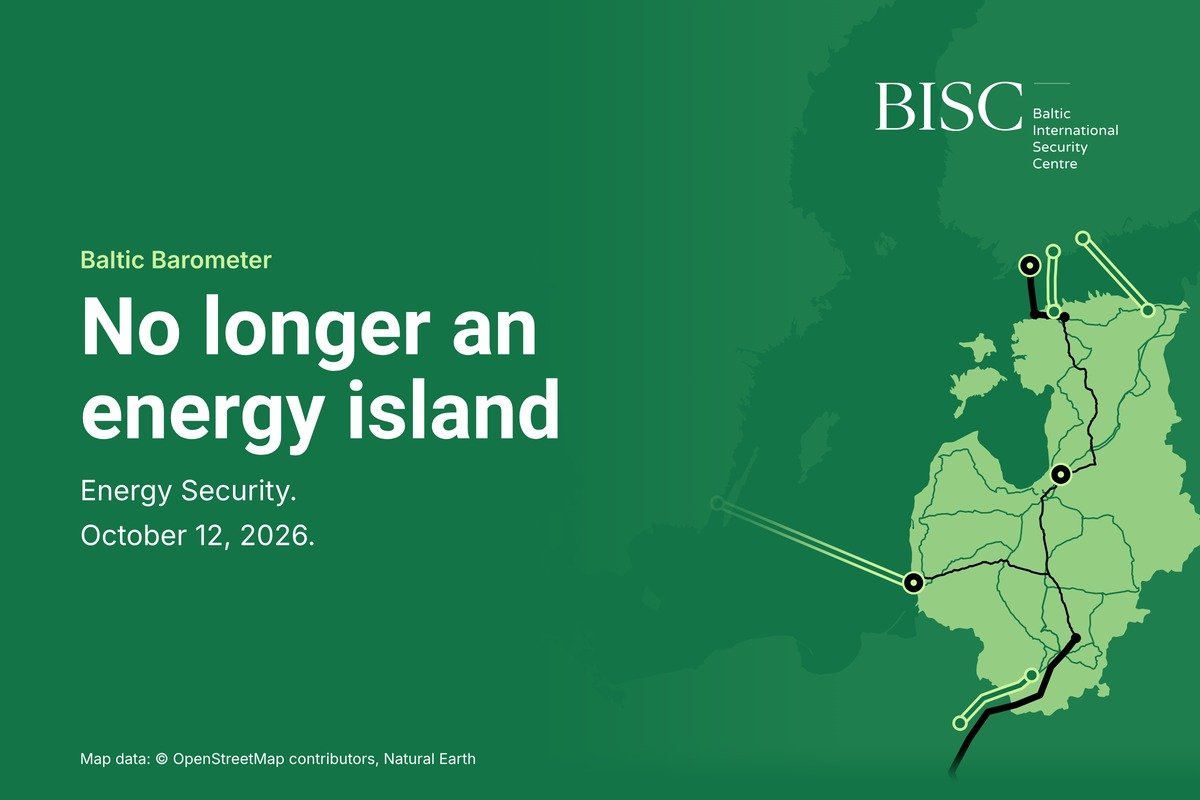
BISC has launched the second edition of its flagship Baltic Barometer. This time, our quarterly report turns its attention to regional energy security.
The Baltic states are still sometimes portrayed as a vulnerable energy island on Europe’s margin. This picture is out of date. As our report highlights, years of sustained investment in LNG infrastructure, new gas and electricity interconnectors, grid synchronisation with continental Europe and renewable generation have transformed how Estonia, Latvia and Lithuania source and secure their energy. The dependencies of old have been broken.
Growing resilience is not the same as total insulation from shocks. The de facto closure of the Strait of Hormuz since late February has precipitated drastic oil and gas price increases, profoundly testing the region’s newly reconfigured energy systems. The report finds that, despite these pressures and lower-than-usual gas storage levels, the Baltic states do not face an imminent energy supply crisis.
It also highlights the benefits of a growing “renewable dividend”. The rapid expansion of low-marginal-cost solar and wind generation is already acting as a price shield, protecting Baltic households and businesses from the worst effects of elevated hydrocarbon costs. Yet this protection remains uneven. When renewable output falls, gas and oil shale still frequently set the market-clearing price.
This price exposure extends beyond electricity. Oil remains the largest fuel source in all three countries, while gas retains an important role in heating and parts of industry.
The Barometer therefore highlights the importance of more energy storage, stronger interconnection and further electrification. Together, these can make low-cost electricity more consistently available and reduce reliance on imported fossil fuels. It also explores the potential longer-term contribution of small modular reactors and regional cooperation in developing them.
To read about this, and more, open the second Baltic Barometer on our programme page.