Our People

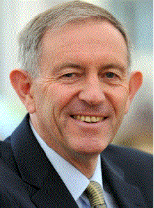
Edward Lucas

BISC founder and director Edward Lucas is a writer and security expert. His expertise includes energy, cyber-security, espionage, information warfare and Russian foreign and defence policy.

Formerly a senior editor at The Economist, he was for many years affiliated with the Center for European Policy Analysis (CEPA), a thinktank based in Washington, DC. He has weekly columns in the London Times and EU Observer, and also writes for Foreign Policy.

In 1992, he co-founded an English-language weekly in Tallinn, Estonia: The Baltic Independent. In 2008 he wrote The New Cold War, a prescient account of Vladimir Putin's Russia, followed in 2011 by Deception, an investigative account of east-west espionage. He has written three other books.

He was also the first foreigner to receive an Estonian electronic identity card, and received the first Lithuanian visa in 1990. He was deported from the Soviet Union, arrested, beaten up, interrogated and spied on by communist secret police agents behind the Iron Curtain.


Caspar Schulze

Caspar Schulze is BISC's Christopher Butler Research Fellow and editor of the centre's quarterly Baltic Barometer. He holds a Bachelor's degree from University College London (UCL) and a Master's from the University of Cambridge, where his research focused on Latvian minority politics and their implications for state security.

Christopher Peters

Educated at St Andrews University and then at SSEES/UCL, Christopher Peters is a lifelong Russia-watcher specialising in private-sector security research and investigations. He leads the Kaliningrad 2050 project team.

Daria Žukauskaitė (Zhukauskaite)

Daria Zhukauskaite is BISC's Kaliningrad 2050 research associate. She grew up shaped by Eastern Europe's fault lines. A recent Harvard graduate, she has researched wealth inequality, documented Russian military strategy in Ukraine, and developed novel computational methodology to analyse Kremlin disinformation. She has also translated Stanislav Shushkevich's autobiography and sourced investment opportunities across CEE for Western investors — all rooted in a single conviction: that democracy is worth fighting for, and that Ukraine must win.

Glen Grant

Lt Col (R) Glen Grant Royal Artillery is a security and defence management expert based in Riga. He had a 37-year military career followed by a further 15 years working for USA and UK on defence matters in over 10 European and Balkan countries.
Since 2014 Glen has worked largely in Ukraine supporting members of the Parliament whilst providing leadership and moral support for army officers, NGOs and defence volunteers. He also works closely with the Armed Forces Human Rights Ombudsman and her team. Glen lives in Riga and lectures at Riga Technical University, Riga Business School on the Bachelor of Business Administration course in Strategy and Crisis Management. Glen is also involved in advising defence business creating links between Ukraine, Latvia and other NATO countries.

BISC's patrons are four former Baltic presidents

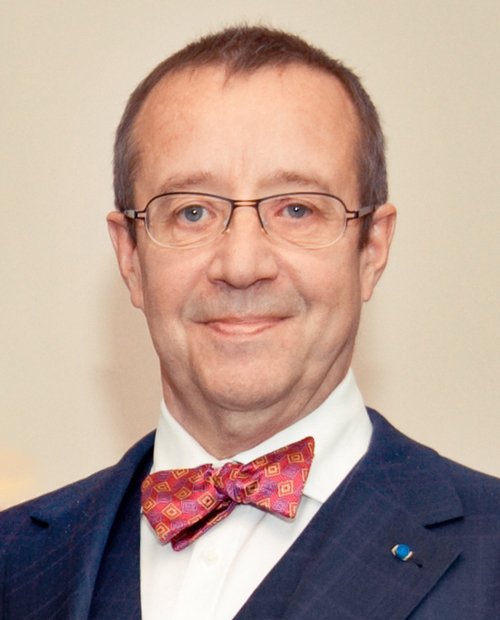
Toomas Hendrik Ilves

A two-term president of Estonia from 2006 to 2016, Ilves was born in Stockholm in 1953, educated in the United States and after 1984 worked at Radio Free Europe in Munich. He has served as Estonia's ambassador to Washington, foreign minister and as an MEP.
Ilves learned to program aged 13, and he has been promoting Estonia's digital development since the country restored its independence. His books include essay collections in Estonian, Finnish, Latvian Hungarian and Russian.

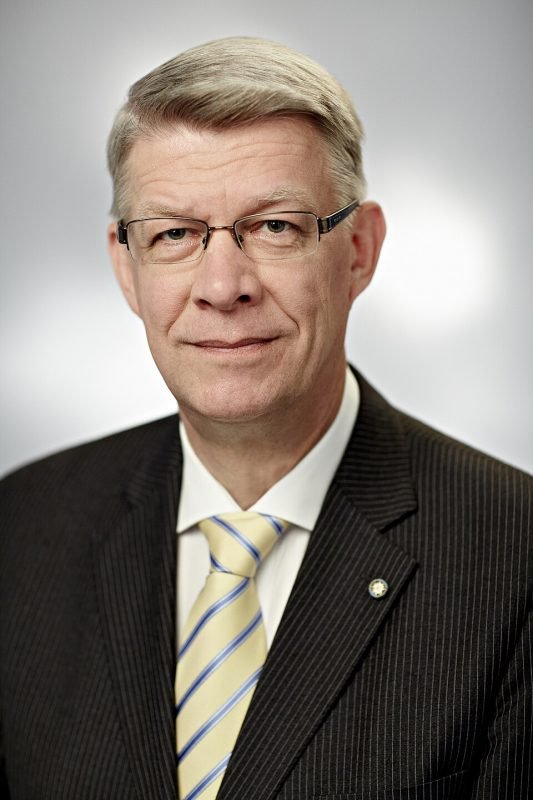
Valdis Zatlers

Valdis Zatlers was the seventh president of Latvia, from 2007 to 2011.

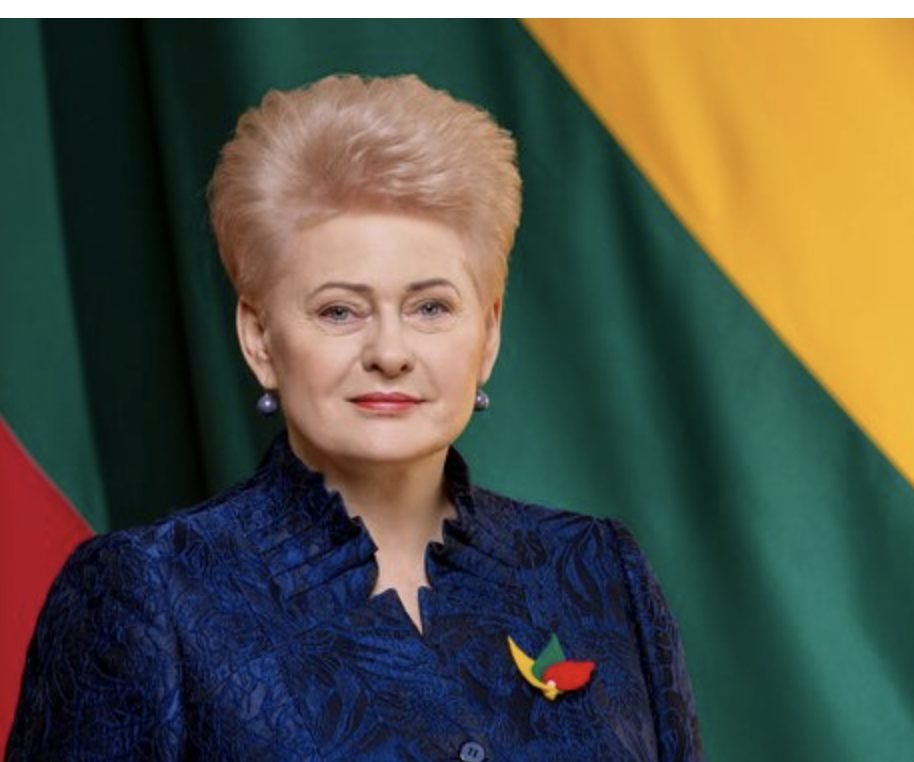
Dalia Grybauskaitė

Dalia Grybauskaitė was a two-term president of Lithuania, from 2009 to 2019.
She continues to speak widely on energy security, transatlantic relations, geopolitical security, sustainable development, economic transparency and accountability and women’s leadership.

Vaira Vīķe-Freiberga

A two-term president of Latvia from 1999 to 2007, Vaira Vīķe-Freiberga is so far the only woman to be her country's head of state. Born in Riga in 1937, she was a prominent academic during her decades in emigration. She played a leading role in European Union and NATO accession.

BISC's trustees guarantee its independence and oversee its governance and strategic direction.

Karin von Hippel

Dr Karin von Hippel's portfolio includes teaching, and advising organisations focusing on defence, security, geopolitics, open-source intelligence, and advanced technology.

From 2015-2024, she was Director-General of RUSI, the London-based defence and security think tank. Prior to that, she served for nearly six years in the US Department of State as a Senior Adviser in the Bureau of Counterterrorism, as a Deputy Assistant Secretary in the Bureau of Conflict and Stabilization Operations, and finally, as Chief of Staff to the Special Presidential Envoy for the Global Coalition to Counter-ISIL.

Her publications include Democracy by Force: US Military Intervention in the Post-Cold War World (2000), which was short-listed for the RUSI Westminster Medal in Military History. She holds a PhD from the London School of Economics, an MSt from Oxford University, and a BA from Yale University.

Paul Goble

Paul Goble is a world authority on the history, politics, demography and ethnography of Eurasia.

He has served in various capacities in the U.S. State Department, the Central Intelligence Agency and the International Broadcasting Bureau as well as at VOA and RFE/RL and at the Carnegie Endowment for International Peace. He has edited five volumes on ethnicity and religion in the former Soviet space.

Trained at Miami University in Ohio and the University of Chicago, he has been decorated by the governments of Estonia, Latvia and Lithuania for his work in promoting Baltic independence and the withdrawal of Russian forces from those formerly occupied lands.

His regular updates ("essential reading" says Edward Lucas) are available at windowoneurasia2.blogspot.com

BISC's advisory council comprises distinguished public figures from the Baltic states and elsewhere. They provide editorial input, help with fundraising and promote BISC's work.